LinEpig: Dwarf Spider ID Gallery
LinEpig: Dwarf Sider ID Gallery
LinEpig is an online reference gallery created to make it easier to identify Dwarf Spider females. Linyphiidae is a very big family of very small spiders that are particularly difficult to tell apart. Many are not much more than a millimeter long, and even under a microscope they often look very similar.
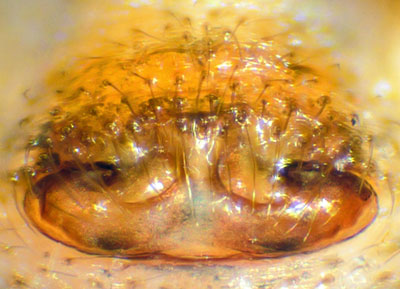
The project name (which we pronounce “LIN-eh-pidge”) is a combination of Linyphiidae and “epigynum” - the term for a female spider’s reproductive organs. In spiders, the reproductive anatomy is very intricate, and scientists use the details to tell related species apart.
The Spiders
The Linyphiidae are some of our most common and least-known spiders. The Sheetweb Weavers (family Linyphiidae - pronounced “lin-uh-FEE-eh-dee”) is a very large family of mostly very tiny spiders. They occur worldwide. But unlike most arthropods - indeed, most terrestrial forms of life - they have their greatest diversity not in the tropics, but in the temperate zones. The family accounts for about a quarter of all spider species in Canada and the United States - more than the next three families combined (the Salticidae, Theridiidae and Lycosidae). In some parts of the US, a quarter of all the spider species may be Sheetweb Weavers.
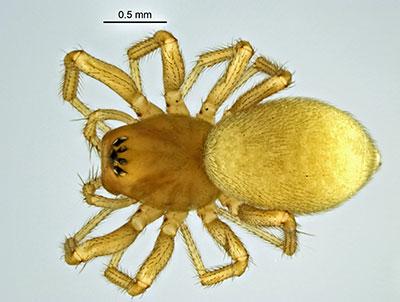
Living in the leaf litter and grasslands, linyphiids have evolved remarkable variations in form and habits. They are known for their “ballooning” method of dispersal, by extruding a strand of silk to catch rising thermals on warm days. They are vigorous agricultural predators and form an important natural check on many crop pests. A linyphiid is the oldest known spider preserved in amber, and linyphiids were among the species described by Carl Alexander Clerck in the 1750s, predating Linnaean taxonomy.
But despite their importance and venerability, they have not had a proportionate degree of attention by contemporary taxonomists. Much of the literature consists of original descriptions, some a hundred years old; most genera await a modern revision.
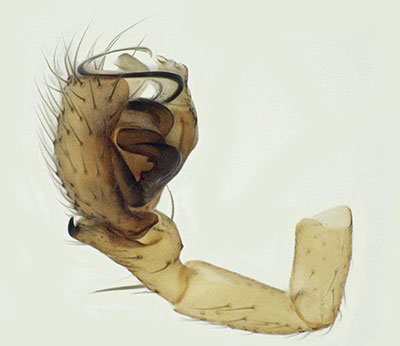
The big subfamily Erigoninae accounts for majority of this family, with about 700 species in North America. While the males of these minuscule animals can have striking head modifications and other showy features, including elaborate pedipalps, females often present an outwardly drab and undistinguished appearance. Identification relies almost entirely on the details of the complex, sclerotized genital structures, called the epigyna. But illustrations of the female anatomy in the taxonomic literature have tended to be perfunctory for the Erigoninae, and sometimes non-existent.
The Project
LinEpig is essentially the sole resource for identifying North American females of the subfamily Erigoninae. As such, it fills a unique gap in spider taxonomy. Female erigonines are the only spiders in North America for which no key to genus exists (they are not included in Spiders of North America: An Identification Manual, the standard reference), making identification of museum specimens almost impossible in many cases. Definite determinations can be difficult even for professional arachnologists.
Borrowing specimens that have been identified by experts from various collections, we have photographed the external genitalia of female erigonines using a stereoscopic microscope and digital microscopy tools. We also include habitus (full body) shots, and images of males if any are present in a vial.
As imaging equipment has become increasingly prevalent at research collections, we now also accept images provided by collaborators working on this group. Online, images from digitized collections link back to the institution’s own collection record.
By making available an online reference to the anatomical structures needed for identification, this Field Museum initiative helps research collections reduce their intractable backlogs of linyphiid specimens. We hope that making identification more accessible will facilitate taxonomic work on the Linyphiidae.